
Lesbians are hardly represented in the political left, at least not in the programme. In practice, too, we hardly find any women who are known as lesbians, let alone who politicise their lesbianism. And the same even applies to feminism (not just left-wing feminism): it is centred around heterosexual women as a matter of course. Hardly anyone seems to be aware that lesbians exist as an independent group within women and also within homosexuals, that they have specific needs and must be taken into account in programmes and practice.
There is a need for action in the life situation of lesbian women, who are among the most marginalised groups in society and have virtually no visibility, infrastructure or representation of interests (quite unlike gay men). For years, they have been mobilising against the view of gender as an internal rather than a physical reality propagated by the queer movement, because the consequence of viewing trans women (trans-identified men) as women and heterosexual trans women as lesbians threatens their spaces, their boundaries and their homosexuality, which of course is not changed by the self-image of others. This concern has not yet been recognised by the wider left.
About precisely this relationship between the left, the women’s movement and lesbians, Paula Boulton spoke to us, a member of the British Labour Party who has been active in the lesbian and women’s movement for almost forty years. She was a founder member of Lesbian Labour.
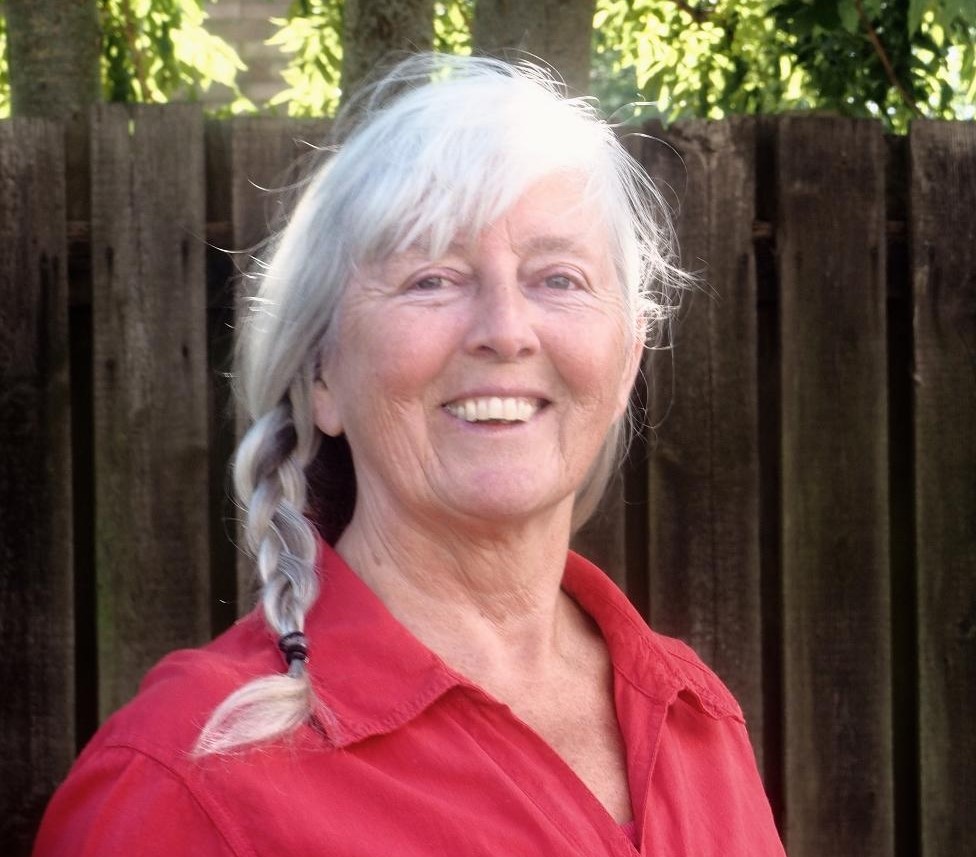
You co-founded the only lesbian representation in a British party. How did Lesbian Labour come about?
I was one of the founding members of Labour Women’s Declaration which came around 2019. We’d all been involved in trying to argue against the proposal of Self ID that was going ahead and we realised that it actually was useful to work within our political parties. I was part of the working group and there were five lesbians in the original working group. So the mix of the two has always been there from the very beginning, because as you understand, lesbians are at the forefront. We tried to get the Labour Party to discuss the issues at Labour Conference etc. But then, if we fast forward, we had the lockdown, we had Covid, and during Covid, I realised, it felt as if the door was closed to us as women in the Labour Party trying to argue against Self ID and it had been taken on in the Labour Party as policy even though it wasn’t taken on nationally.
So I had the idea of, well hang on a minute – if the door was closed to us as feminists, it’s certainly open to anybody in the LGBTXYZ alphabet. So if we go in as lesbians they have to have the door open for us. So that was the idea and so in November 2020 we started forming Lesbian Labour and we wrote very clear founding statements, you know, being clear that „Lesbian“ was a separate category to LGB. It shouldn’t be in with the LGB and it shouldn’t be in with the LGBT. That we have misogyny, we have homophobia, we have lesbophobia, we have misogyny from the gay men as well as from the straight men and that we have a specific set of discriminations against us.
We found that initially, there was a kind of open door, but it very quickly closed in our faces, almost quicker than the door had closed to the women. Within the actual party itself, we did manage to speak to previous shadow Women’s Ministers, Dawn Butler and Marsha Da Cordova, more recently it’s become Anneliese Dotts. And in fact, when it came to the general election, and it looked as if Labour might become the government, we actually looked back at all the correspondence. I published those as „letters from a tenacious lesbian“. Because there have been lots and lots and lots of emails that have never been answered, never had any response. But it lays out the arguments that we have been trying to put.
So when Labour then got into government, some of us were very happy because we’re all socialists. But we knew, on this issue, the Tory Party, we’ve done all the work with them, while they were in government, behind the scenes, and they were at least saying that they understood. So there was this real mix, women didn’t know who to vote for, because as far as Labour was speaking, they don’t understand the issue. There were some who said, „I will vote the way that relieves poverty, because, you know, we are really living in austerity and I will just have to suck up my feelings on this issue and carry on fighting“. But we had women, lifelong Labour supporters, who could not bring themselves to vote Labour. I’m sure this is replicated in other countries, I don’t think we’re unusual on this. Because the right are exploiting the issue, but also, some of the right, the kind of middle of the road if you like, understand sex, that sex realism is a fact. They don’t have to go along with this created myth of gender.
Keir Starmer, who was then not the Prime Minister, but the leader of the Labour Party, said in 2023 publicly something like, „There are only two sexes and one cannot change sex.“ We in Germany were extremely relieved, because we thought, „finally, a major left politician says the truth and seems to have understood how important this is“. Wes Streeting formerly supported this queer theory stuff, but a year ago or so he changed his mind. Then when the Cass Review was published he said that he found this important and that he plans to implement Hillary Cass’s suggestions. Is this just for the public?
No, I think, these are accurate perceptions. There was a bit of doubt behind Wes to start off with but he has been consistent and we know that he also made steps to speak to gender critical groups. There have been meetings. He had actually reached out and spoken to people on our side.
Keir is still not hundred percent. He kind of realised that he was going to have to say something and that „99 percent of women“ wasn’t the right thing to be said. But it’s probably a good measure to see how he has been with Rosie Duffield. She has consistently tried to have a conversation with Keir and he has not spoken to her. And now she’s resigned and it isn’t just about this. It’s about his style of leadership, it’s about his political naivity, his lack of political career before he became an MP and she’s absolutely right. The stuff that she said is absolutely right.
The problem with Labour is also that they are very much led by what I witnessed at Conference last year: young men in pointy shoes and very smart suits. They doesn’t even look like at Labour Conference, and I’m not suggesting it should be farmers and labourers and steel workers there. But a conference of ordinary people. These are university educated smart boys who are shaping it. And they’ve all been steeped in the trans rubbish. And MPs are not in charge of what comes into their inbox. Their staffers are. And there have been two or three staffers behind the scenes who have diverted anything away, so it’s quite reasonable that the MPs are being fed the trans story as the right thing to say. Not that they necessarily agree with it but that what they’re being presented with comes through the filter of these men in sharp suits and pointy shoes.
So you would say that speaking out as lesbians instead of just women has not made it easier, right?
I would agree.
There were a couple of openly lesbian politicians or MPs who didn’t support you. But as far as I have understood, it wasn’t out of fear, they were actually convinced of this queer ideology, is this right?
Yes, that’s absolutely correct. We also know that they are funded. If you follow the money on this, Angela Eagle is bought and paid for by Stonewall. I’ve heard her speak and I think she actually believes it but there is also the money to look into. Follow who they’ve accepted money from.
And now of course it’s been the problem with Keir over the last few weeks accepting donations from Lord Alli and there’s a lot going on. I wouldn’t be surprised if the reason they keep this promise that they’re going to simplify the Gender Recognition Process is to do with funding as much as this ideology.
Do you think that these lesbians that carry the queer ideology speak for the majority of lesbians in the UK?
No. I’m absolutely clear because apart of Lesbian Labour, I also run Lesbian Fightback. Carol and I who are both in Lesbian Labour decided that there needed to be a way to get to the politically homeless lesbians as well. Because we can’t find them in the parties, but where are they? So we started Lesbian Fightback and now as a network there are over 40 organisations, individuals and organisations.
And you could tell from that, these are lesbians saying that we represent them. And then the other thing I’m involved in, is Lesbian Strength, which continues the work that started in the 70ies and 80ies. Although we all had to work with gay men at the time for gay rights generally, there was always a seperate lesbian side to that. We just had our Lesbian Strength March and the reactions that we got to that and to the video of that show how widely we are supported. We are not a negligible amount. But we are asking ourselves, where are the other lesbians?
There are definitely a lot of lesbians that are not yet aware that this is going on. I travelled a lot this summer and in very different areas I came across lesbians. It’s so mad, the idea is preposterous. So when you try to tell them, it’s like, „No, you can’t be right“. They think that it is right for us to stand with the trans community. Because on the surface, it’s another group who are considered to be different and we know what it’s like to be considered differently in society. And they don’t take their thinking any further. And unless it’s affecting them personally, they don’t understand.
I’ve spoken to lesbians who don’t realise that the majority of men who say they want to be women do not have the operation. They hold in their minds somebody who goes through the full operation and what a terrible thing that must be and that’s a serious decision. And when you tell them then we sound like we’re crazy.
And when you talk to lesbians who don’t know what’s going on and you tell them about “Lady Dick,” for example, you sound like you’re crazy. And it’s like, “I’m not making this up,” but if you’re the first person to introduce it to them, it immediately makes you seem less credible. That’s very difficult. They’re not going to read. If you say, “Check out this website” or “Try looking on a dating app to see who some of these alleged ‘lesbians’ are,” they’re not going to do that work. That’s one of the problems I always have.
And then there are the lesbians who have integrated into society, who have claimed all their rights, who are married and have a family and do not enter the social world of lesbians. It doesn’t even affect them. I don’t know what we do with that except be the horrible people who tell the truth and are considered crazy. We are sometimes labeled as the “shouty lesbians”. “We have all our rights, we fought for them in the 80s and 90s.”
Have you personally been involved in the lesbian rights movement for a long time?
Yes, since 1988, when there was the ruling on Section 28 in the UK, which banned the promotion of homosexuality. You weren’t allowed to talk about it in schools. In my town, the council even refused to give us money in 2000. I have a group called Visibility 2000 so we could celebrate the new millennium in the arms of our lovers publicly without having to hide, and our town council, which is our local level of government, were offering small grants for support groups and we applied and their legal team advised them that it would be against section 28 to give us 500 pounds. I went and confronted them and when I said, “Stonewall will provide us with their lawyers and pay our legal fees for this fight” they backed down and gave us the money. So back in 2000, Stonewall did what they were supposed to do.
Even in 2010. I write plays, and the youth group that I was running had written a play about bisexuality, and the film of the play was going to be presented at an event called “The School’s Out Conference,” which was aimed at schools that had lesbian and gay staff who were trying to make sure that the schools were welcoming places. And the difference between 2010 and 2000 was significant. In 2000 it wasn’t okay, in 2010 it was.
I have noticed in Germany that this gender ideology is mainly pushed by gay men. Also by heterosexual men who identify as trans, but there are a lot of gay men who are pushing this agenda. Is it the same in the UK and in the Labour Party?
Yes, that’s a very simple answer. It’s not something that men really understand. They’re starting to understand it a little bit because there’s a problem right now with the so-called trans men going into the gay spaces. They’re not stupid, they know they’re women. They defend their spaces much better and they have a lot more money invested in them. I would agree with your assessment, it’s the same here.
The UK is the country where the most is happening in relation to the trans movement. There are a lot of organisations and a lot of gender-critical women who speak out publicly. How are you as Lesbian Labour networked with these actors?
We are part of a network that meets weekly. There are key figures in almost all of these groups who are lesbians. They have often been working on this topic since 2016, while many others joined years later. There was a vanguard of lesbian women, we call them canaries in the coal mine, who gave early warning and were at the forefront. Many of us are also active in women’s groups.
We have the problem that although we lesbians support all women’s issues, the other way round doesn’t necessarily exist. That’s why Lesbian Fightback is so important. These activists speak as women about the need for safe spaces. We agree with that, of course. There must be prisons, hospitals, women’s refuges, changing rooms and so on that are reserved for women. But we lesbians need female spaces to exist at all. And the others never go that far. It’s very dispiriting.
We have put a lot of energy into these groups, we are women too, we need the safe spaces too. But the heterosexual women don’t reciprocate by understanding this point, that we need this culturally, to breathe, to exist. It was actually already like that in the 70s. Lesbians have done a lot of work in the women’s movement, but we are not necessarily remembered.
When heterosexual feminists have been given their right to female changing rooms and so on, they claim it somewhere, and then they go home to their husband. They only want female spaces for certain situations. We lesbians fundamentally need female spaces to exist at all. And they don’t understand that. That’s one of our biggest issues that we have to fight here.
I’ve observed something similar. Heterosexual feminists tend not to care that much about lesbians in general. I mean, we all know that we are a minority and can’t be in the center all the time. But I find it hard to get solidarity from heterosexual women and heterosexual feminists. I think it’s fair to say that we lesbians suffer the most from the trans movement, which hits us the hardest. It denies our existence as lesbians. And as you just said, straight women tend to experience problems in very specific situations or places. I have seen that many feminists and women in the women’s movement have started to adopt this trans ideology. I wonder if the fact that most of these women are straight can be a reason why they don’t understand the problem with this ideology.
Yes, absolutely. I’m a musician and was at a recorder course at the weekend. There were 60 people there, mainly aged over 50. One was an AGP. It was a mixed class, so there was no reason why the person shouldn’t be there. But the acceptance and almost embracing of what to me is absolutely not okay, made me think. It happens especially to liberal feminists because they like to think that they are particularly tolerant, especially of difference. They see it as an extension of liberalism. You can also see the same attitude towards prostitution. The liberal feminists think you shouldn’t tell anyone what to do. They don’t understand.
I sometimes think that our own connection to feminist gender-critical groups doesn’t help us. For example, we support these groups when they advocate for the right to gender-specific restrooms. It’s actually the masculine-looking lesbians who have always had a problem in the restroom themselves because women have asked, “um, are you a man?”. We experience that! And yet we stand alongside the other women while they fight for the exclusion of men. But they are fighting from a different point of view, without realizing that it has always been a problem for us.
The whole misgendering thing has always been a problem for us too. We’ve just never forced society to rewrite its entire legal basis based on limited ideas of what is masculine and feminine. Nevertheless, we’ve always had this problem.
Can we talk about left-wing men?
Yes, please (laughs).
One of our biggest problems in the UK, particularly in the trade union movement, is that motions are not ‚passed‘. There is a rule at the Scottish Trades Union Congress that the Scottish trade union women’s motion is automatically passed at the main conference. That is the rule, and whatever you can say about the labour movement, it abides by rules. But they bent the rule! They didn’t accept the motion, they changed it. First they accepted it, which was about women’s rights, and then they changed the wording. In doing so, they broke rule no. 1. And then they put it to the vote, even though it was supposed to be accepted automatically, and the male trade unionists voted against it. And these are men! These are trade union men who all protested Posie Parker too. They swallowed the trans nonsense without questioning it. They see it as a workers‘ rights issue, which it’s not.
Don’t even get me started on that. Leftist men who think it’s progressive and then don’t even think it through. We also have this thing where ordinary workers are suddenly told to put pronouns in their emails. They have absolutely no idea what it’s all about. And they’re literally waiting to be told what to do. So it’s not a movement from below at all, it’s being imposed from above.
Every year there is a big Gala in Durham, where there are a lot of miners. All the miners march with their flags, it’s a great event. I was there last year and there was this feeling of socialism, unity and proper solidarity. I thought, if we can get these people on our side, we’re okay. And then I find out they’ve been sold out to the other side. They were on stage, and 99% of the things that were said, I was cheering! And then they said, “we need to support our trans comrades and fight against transphobia” and I was like, fuck off! Just think!
I don’t know how to get out of it. I’ve tried to talk to my comrades in the trade unions. They are so top-down that it takes the leadership, the relevant trade unionists, to tell the rank and file what they should think. They don’t think for themselves. Is it the same in Germany?
Yes, I would even say that left-wing men are often more sexist than non-left-wing men. The second wave of feminism has meant that feminism is now considered a left-wing issue. But that’s often just lip service. And that protects sexist men. Many simply think that I’m on the left, so everything is done and I don’t have to deal with it. In addition, many on the left, especially from the trade union and socialist tradition, believe that there is no conflict of interests between men and women in the working class. The official left ideology says that working class women and men have a common goal and must fight together against capitalism. But this is not entirely true. Working class men use violence against women. You also can’t say that the problem of female oppression and violence against women only comes from capitalism. Many men who go to prostitutes or beat their wives or harass women are working class men. That’s the truth that the left doesn’t want to see. I think that’s why many on the left don’t see the conflict between trans rights and women’s rights. In Germany they always say that you are “dividing” the working class if you say that there is a conflict between trans rights and lesbian rights or women’s rights.
There is even a division here between the left-wing women in the gender-critical movement. There are those who organize demonstrations out on the streets and those who try to influence the legislative processes, and there’s no love lost between them. The socialist feminists are very much against the street feminists. But they’re all on the left. The argument is really vicious and very divisive. It’s crazy.
How did you personally get involved in the debate about trans rights? You said that you have been active in the lesbian rights movement for forty years. How did you realize that trans ideology was a danger?
I wrote this play in 2010. At the same time, I was running a theater group for homosexuals. There and in a support group, I was supposed to accept trans people, although the people in the group didn’t want that. I didn’t understand why either. I wanted to keep the “T” and “LGB” separate.
In 2000, I was on a women-only walking holiday. I suddenly thought one of the women had brought her husband with her because I heard a man’s voice. One of the people was one of the early AGPs who transitioned. He took over the women’s bookshop in York. We were all allowed to be angry back then. Everyone vented their anger that we’d paid extra money to go to a women-only event and that he had no business being there. We made it clear to him that this wasn’t on, back then you could still have these conversations.
In 2002, we organized a lesbian disco at a women’s center. A guy called me to ask if he could come. I said, “No, of course not, you’re male”. He then said he wouldn’t be happy until there was a “cock in a frock” in every town in England. I thought that was super creepy.
I later had to deal with an AGP coordinator of a women’s center who wanted to tell me how women react to domestic violence. I made it clear to him that, as a man, he didn’t need to explain anything to me about women. Back then, there was no concept of being transphobic. You could just say what you saw.
Then in 2014, an AGP fetishist joined lesbian support groups. One was a camping group. He was walking around in a miniskirt. We didn’t want him there. I was then reported for an alleged hate crime. I remember how scared I was. I’ve been dealing with it for ten years now and I’ve really had enough.
Two years later, there was an international women’s meeting in France. I heard all these stories from other countries about trans-identified men who wanted to join women’s groups. I remember coming back to England and we laughed about how crazy other countries were.
I then went to the Thinking Differently conference in 2016. An American woman had reported on how the birth protocols had been changed. A midwife said that would never happen here, we know the difference between boys and girls. But it did happen. And so everything happened bit by bit.
In your opinion, what mistakes have been made by the women’s and gay right’s movements in the past?
I think one of the things we did wrong was that we didn’t respond directly with equal force. In 2018, for example, women protesting at a Pride demo stating that trans activism erases lesbians were accused of being “transexclusionary radical feminists” and that there could be no debate about it. At that point, we could have fought back more fiercely. But we didn’t because it was so silly. We didn’t perceive the degree of threat.
We also didn’t understand at the time how widely funded this activism was. We accepted “no debate” because our attempts at discussion were simply not taken on board. Actually, we should have continued to say no, we should have confronted them. To this day, I have very rarely had a discussion with a trans rights activist because they just don’t do that. But that also means that we haven’t honed our arguments.
We were in echo chambers. I traveled a lot last summer and seeing how the rest of the world sees this issue was very healthy. I think we should do that more often.
We also let our work slide and stopped paying attention. We thought we were done where we had equal rights as lesbians and gay men. As a women’s movement, we can’t stop. We also didn’t write anything down about the successes we had in the 80s, the right to women-only spaces. There is now a whole generation that knows nothing about the feminism of the 80s. We were too naive to think that any achievements were permanent. We should know that they are not and that we have to keep fighting.
And we have to pass the baton on to younger women. So that the others can get off (laughs). We want to put our feet up!
What I also take away as a lesson is the fact that there is a difference between gays and lesbians. We are both homosexuals, but gays are still men. It’s important to have representation of female homosexuals. I don’t know which came first, whether the shared gay and lesbian organizations came first or whether this ideology came first.
In the UK, gay organizations were the first to be joined by lesbians. At that time, it was all about sexual orientation. Because the women’s movement was also growing at the same time, other women were also able to come out as lesbians in this women-centered context. There was little in common between the two groups. There was always a struggle between the feminist lesbians and those who had no social concerns beyond their homosexuality. This division still exists today. I don’t know how to overcome it. I personally feel more comfortable in the women’s movement and had my coming-out there, or actually in the peace movement. But the lesbians outside of that are very honest because they know that they are different if they are attracted to women and society doesn’t work that way. They just don’t think so much about the fact that their oppression is rooted in patriarchy. They experience their sexual orientation as the cause of their discrimination. They have a different analysis of society.
Thank you for the interview.
 Diskurs: Linksfeminismus